

Media


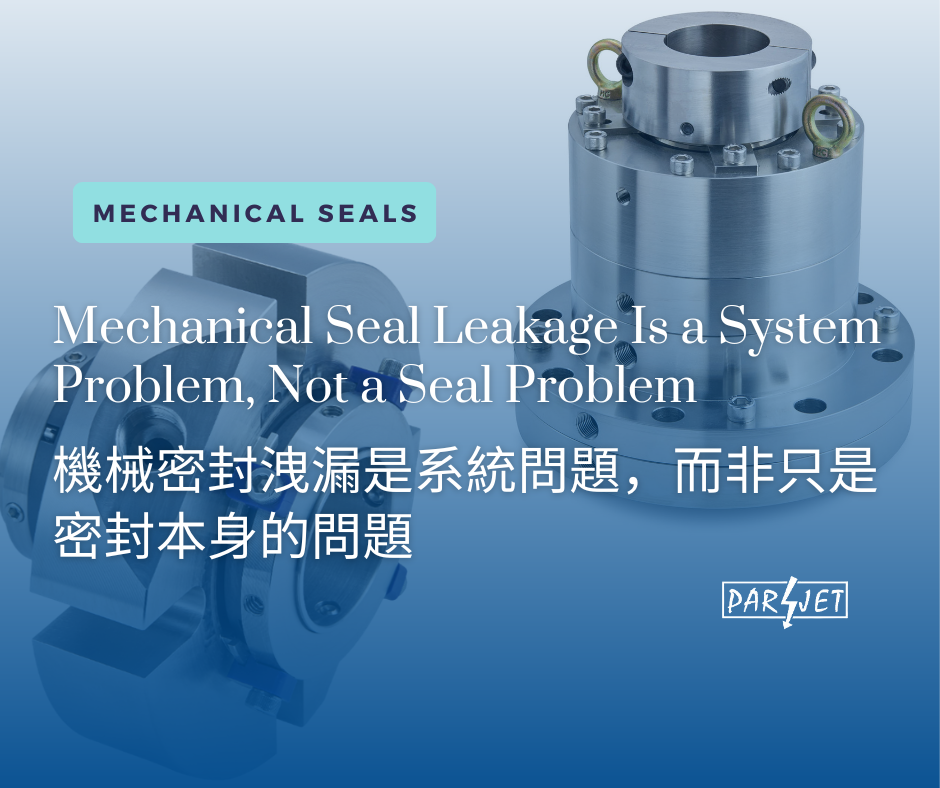
Mechanical Seal Leakage Is a System Problem, Not a Seal Problem
Mechanical seal leakage is often treated as a component failure. In practice, however, many leakage issues persist even after seal replacement. This leads to a critical realization:
Mechanical seal leakage is rarely caused by the seal alone, it is typically the result of system-level problems.
Understanding this distinction is essential for engineers seeking long-term reliability rather than repeated short-term fixes.
Why Replacing the Seal Often Doesn’t Solve the Problem
When leakage occurs, the most common reaction is to replace the mechanical seal. While this may temporarily reduce leakage, the issue frequently returns.
This is because the root cause often lies in:
- Equipment design limitations
- Operating condition fluctuations
- Installation and alignment issues
- Inadequate support systems (e.g., flushing, cooling)
Without addressing these underlying factors, even the highest-quality seal will fail prematurely.
The System-Level Causes of Mechanical Seal Leakage
1. Shaft Misalignment and Runout
Mechanical seals rely on stable face contact. However, system issues such as:
- Shaft misalignment
- Excessive runout
- Bearing instability
can disrupt the sealing interface.
Even small deviations can lead to uneven wear, face separation, and eventual leakage.
2. Pressure Fluctuations and Hydraulic Instability
Mechanical seals are designed for specific pressure ranges. In real systems, pressure is often unstable due to:
- Pump cavitation
- Flow interruptions
- Improper system design
These fluctuations can cause:
- Seal face opening
- Increased leakage rates
- Accelerated wear
3. Thermal Distortion
Temperature variations across the seal faces can lead to distortion. This may result from:
- Inadequate cooling or flushing
- High-speed operation
- Process fluid temperature changes
Thermal distortion alters the flatness of the sealing faces, reducing sealing effectiveness.
4. Improper Flushing and Cooling Systems
Many sealing failures are not caused by the seal itself, but by insufficient support systems.
Poor flushing design can lead to:
- Heat accumulation
- Contamination buildup
- Dry running conditions
Without proper fluid circulation, even well-designed seals cannot maintain stable operation.
5. Contamination and Process Conditions
System-level contamination is a major contributor to leakage. Common sources include:
- Particulate matter in process fluids
- External environmental ingress
- Inadequate filtration
These contaminants damage sealing surfaces and disrupt the lubrication film.
6. Equipment Vibration and Structural Issues
Vibration is often overlooked but has a significant impact on sealing performance.
Sources of vibration include:
- Imbalanced rotating components
- Poor foundation or mounting
- Resonance within the system
Vibration causes dynamic instability, leading to leakage even when the seal itself is properly selected.
Rethinking Mechanical Seal Selection
If leakage is a system problem, then seal selection must go beyond basic specifications.
Instead of focusing only on:
- Seal type
- Material compatibility
Engineers should consider:
- System dynamics and operating variability
- Equipment alignment and stability
- Thermal and hydraulic conditions
- Integration with flushing and cooling systems
This requires a more holistic, engineering-driven approach.
From Component Replacement to System Optimization
To effectively eliminate leakage, the focus must shift from replacing components to optimizing the entire sealing system.
Key strategies include:
- Diagnosing root causes at the system level
- Improving equipment alignment and stability
- Optimizing operating conditions
- Implementing proper auxiliary systems (e.g., flushing plans)
This approach not only reduces leakage but also extends equipment life and reduces maintenance costs.
Engineering Solutions for Real-World Conditions
Modern mechanical seal solutions are increasingly designed with system integration in mind. Rather than functioning as standalone components, they are engineered to perform reliably under complex operating conditions.
Advanced designs may include:
- Optimized balance ratios for pressure control
- Robust face material combinations for thermal stability
- Cartridge seal configurations for precise installation
- Enhanced sealing geometries for improved reliability
Conclusion
Mechanical seal leakage should not be viewed as a simple component failure. In most cases, it is a symptom of deeper system-level issues.
By shifting from a reactive replacement mindset to a proactive engineering approach, it is possible to:
- Eliminate recurring leakage problems
- Improve system reliability
- Reduce maintenance frequency and costs
For applications where operating conditions are complex and demanding, selecting a sealing solution that is designed with system performance in mind is critical.
Parjet’s ParSeries® Mechanical Seals are developed with this engineering philosophy—focusing not only on sealing performance, but also on real-world system conditions such as pressure variation, temperature, and installation accuracy.
✔ ParMix® – Double-Acting Liquid Lubricated Mechanical Seal (High-pressure & high-temperature applications)
✔ ParAce® – Single Cartridge Seal (Pumps & compressors)
✔ ParDual® – Dual Cartridge Seal (High-performance sealing)
✔ ParLip® – PTFE Reinforced Lip Seal (Gear pumps & mixers)
✔ ParFloat® – PTFE Lip Seal for Agitators & Mixers
With a comprehensive design approach and application-driven optimization, ParSeries® provides reliable sealing solutions that address the root causes of leakage, not just the symptoms.